Supply Chain Management 101: A Glossary of Common Terms
- Fred Arungah

- Jan 3, 2023
- 5 min read

Supply chain management is a vital part of today's business world, and understanding its terms and concepts is crucial to understanding how it works and how it affects your organization. Supply chains are currently facing many global disruptions and are under significant pressure. In this article, we will delve into the top 10 most important aspects of supply chain management.
Procurement
Procurement is the process of acquiring the raw materials, semi-finished goods, or finished products that are needed to run an organization.
There are two main types of procurement: direct and indirect. Direct procurement involves the acquisition of materials that will be used in the production of a finished product. This could include raw materials, semi-finished goods, or products that are in the process of being assembled.
Indirect procurement involves the acquisition of items that are necessary for running the business but are not directly related to the production of a finished product. These may include office supplies or other non-critical items. Both direct and indirect procurement can be managed through similar processes and operational models.
Supplier Management
Supplier management is a crucial aspect of supply chain management. It involves understanding and managing the vendors and suppliers that provide the raw materials, components, and products necessary for an organization's operations. This is particularly important for companies with complex supply chains that involve a large number of different parts or raw materials.
In order to effectively manage suppliers, it is important to identify all of the different vendors for each raw material or product, as well as measure the quality and cost of their offerings. It is also important to have backup suppliers in case the primary vendor is unable to meet the organization's needs, in order to mitigate any potential supply chain disruptions.
Overall, supplier management is focused on ensuring that the necessary materials and products are obtained from reputable and reliable vendors at a good cost.
Inventory Management
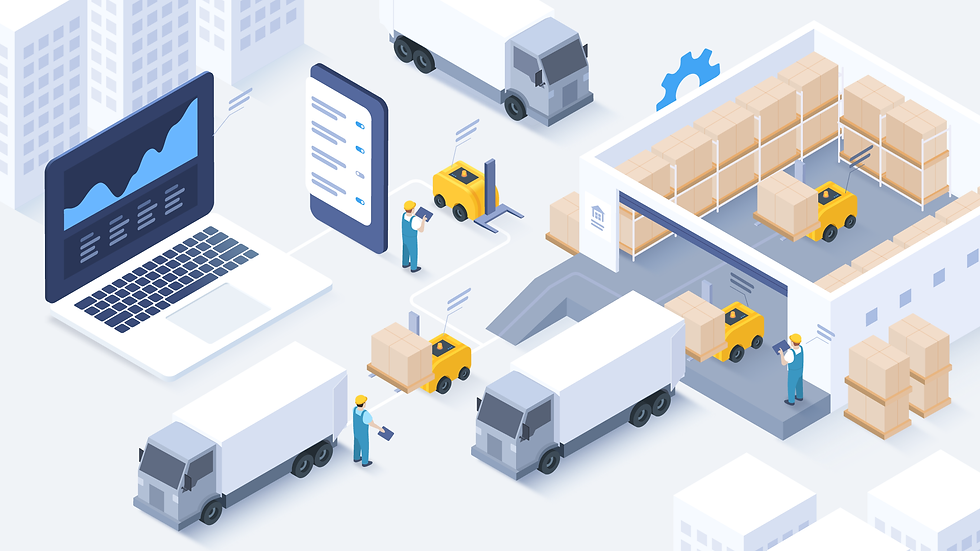
Procuring materials and products from vendors is only one step in the process. After these items have been acquired, it is important to manage the inventory to ensure that the necessary materials are available when needed.
This involves tracking and understanding what materials are in stock, where they are located, and when more of a particular material may need to be ordered. Inventory management also involves the organization and management of a warehouse, including where materials are stored and how they are organized.
Ultimately, inventory management ensures that the necessary products are available and can be delivered to the end customer.
Electronic Data Interchange (EDI)
Electronic data interchange (EDI) is a common method used by organizations to communicate with vendors, suppliers, and customers. EDI allows for electronic communication and can be used to place orders with vendors or suppliers, or to receive orders from customers.
Many organizations use EDI as part of their core enterprise technology or other digital means in order to efficiently manage and communicate with different players throughout the supply chain.
Freight And Transportation
Moving products throughout the supply chain is a crucial part of supply chain management. This includes understanding how raw materials will be transported from the manufacturer or producer to your facilities, which may involve shipping by water and then delivery by truck.
It is also important to understand how finished products will be transported to customers, whether by truck or through other means such as shipping.
This concept of freight and transportation is essential to ensure that materials and products are delivered efficiently and effectively throughout the supply chain.

Logistics Management
In addition to understanding freight and transportation, it is important to understand how to manage and oversee this process, which is known as logistics management.
This involves ensuring that shipments are properly handled and delivered throughout the supply chain, from the time they leave the supplier's warehouse to the point of arrival at a port, including customs and international trade considerations.
Logistics management is a complex function and may involve the use of technologies such as enterprise resource management systems or supply chain management systems to aid in the management of logistics processes.
Freight forwarding companies play a key role in the supply chain by organizing and coordinating the movement of goods and materials from one location to another. They handle all aspects of transportation, including arranging for the appropriate mode of transport, negotiating with carriers, and handling customs and documentation requirements.
Freight forwarding companies can also offer additional services such as warehousing, distribution, and cargo insurance. By outsourcing these tasks to a freight forwarding company, businesses can focus on their core operations and leave the logistics and transportation management to experts in the field.
Warehouse Management

Warehouse management is an essential part of the supply chain process. It involves managing the entire warehouse, including tracking inventory, determining reorder quantities, and handling the pick, pack, and ship process for customer orders. This requires good information, data, and systems and processes to ensure that the warehouse runs efficiently and effectively.
Warehouse management plays a crucial role in the production of a product, including pulling raw materials from the warehouse, manufacturing the product, and then storing the finished product in the warehouse until it is ready to be shipped to the customer. Overall, effective warehouse management is critical for smooth and successful supply chain operations.
Drop Shipping
In today's fast-paced business environment, organizations are under pressure to produce and ship products quickly in order to meet customer expectations. To speed up the supply chain process, some organizations may use drop shipments, which involve bypassing the traditional warehouse management function and instead shipping directly from the supplier to the end customer.

This can be seen in the consumer world with online retailers like Amazon and Alibaba, where products may be shipped directly from third-party warehouses rather than going through the retailer's own warehouse first.
Drop shipments can be used for finished products, but may not be possible for raw materials or semi-finished goods that need to be produced or finished at the organization's own location before being shipped to customers. Overall, drop shipments can help to speed up the supply chain and improve efficiency.

Back Ordering
Back orders occur when a vendor or supplier is unable to deliver the raw materials, components, or finished goods that an organization needs in a timely manner. This can result in a backlog of orders that the vendor must catch up on.
In these situations, effective supplier management can be crucial in mitigating the risk of back orders. This includes having backup vendors or suppliers who can deliver the necessary materials faster and at a lower cost if the primary vendor is unable to meet the organization's needs.
By proactively managing the supplier base and having contingency plans in place, organizations can reduce the risk of back orders and maintain a smooth and efficient supply chain.

Landed Cost
The landed cost of a product is the total cost of acquiring and transporting the product from the supplier to the organization's warehouse. This includes the cost of the product itself as well as any additional costs such as freight, customs, and other expenses related to international trade and shipping.
It is important for organizations to understand the landed cost of their products in order to accurately price them and determine their margins. By analyzing the landed cost, organizations can also identify opportunities to optimize costs and potentially reduce expenses.
For example, if the freight costs are high due to the use of air freight, the organization may consider switching to a more cost-effective mode of transport such as shipping by water.
Understanding the landed cost is therefore a critical aspect of supply chain management and can help organizations to make informed decisions about their pricing and cost optimization strategies.
We hope this article has helped you to better understand the various concepts and functions involved in supply chain management.
By understanding the importance of procurement, supplier management, inventory management, logistics, and warehouse management, you can gain a more complete understanding of how supply chains work and how they can be optimized for your organization.
If you found this article useful, be sure to subscribe to receive similar content in the future.


Comments